Starting a new Minecraft world can feel deceptively simple. You spawn with nothing, the landscape stretches in every direction, and for a few peaceful minutes it seems like you have all the time in the world. Then the sun begins to set.
Your first days in Survival mode establish the foundation for everything that comes next. A strong start means reliable food, basic equipment, a safe base and enough resources to begin exploring without turning every trip into a desperate fight for survival.
This beginner's guide covers the essential steps for building that foundation and turning your first Minecraft world into an adventure built to last.
Your First Priority: Get Wood
As soon as you spawn, find the nearest trees and collect wood. It is the starting point for almost every important tool you will need during your first day.
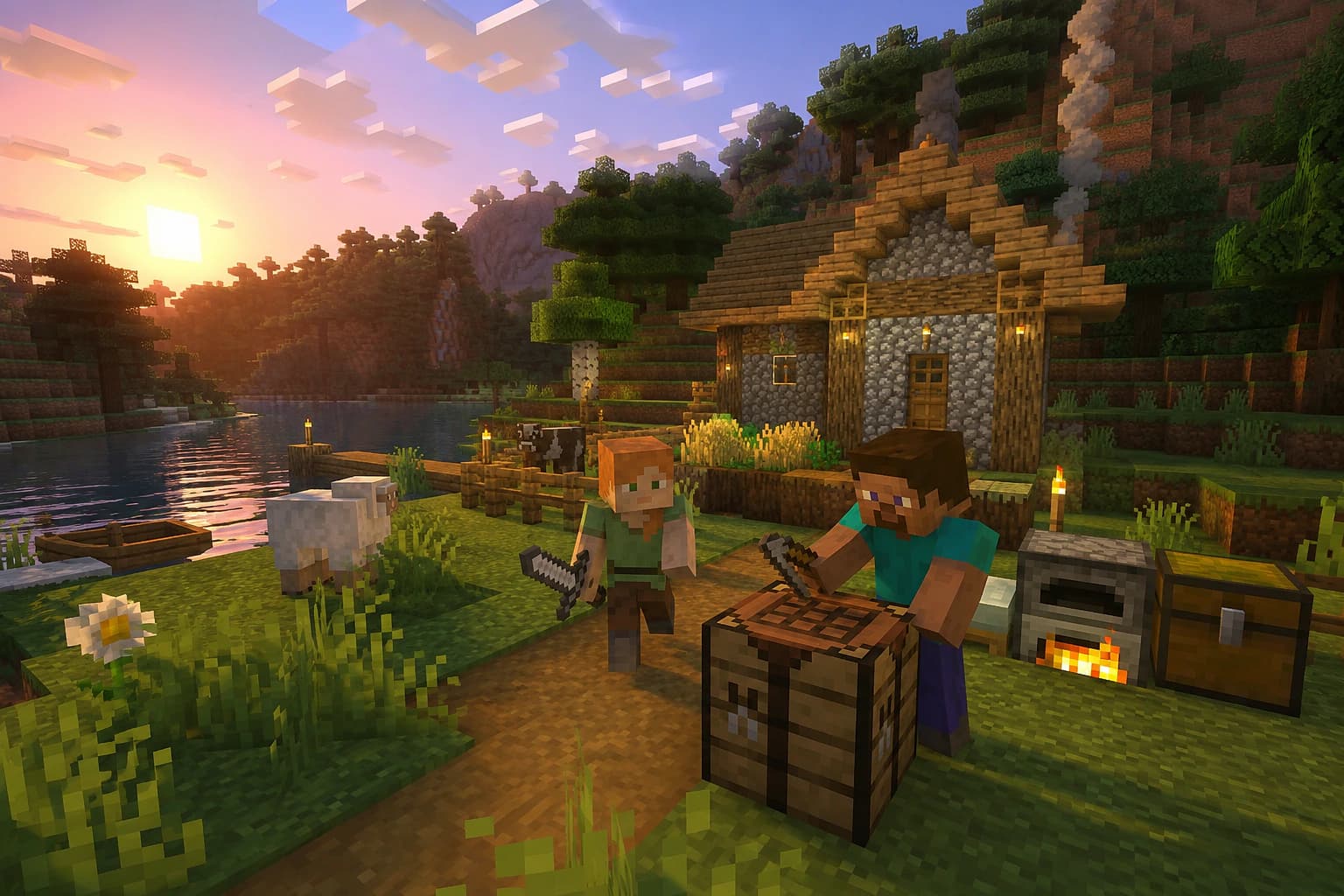
Turn logs into wooden planks, create a crafting table and make a basic wooden pickaxe. You do not need a complete set of wooden tools. The wooden pickaxe is primarily your gateway to stone equipment.
Once you find exposed stone or dig safely into a hillside, collect enough cobblestone to upgrade quickly.
Your early targets should include:
• Stone pickaxe
• Stone axe
• Stone sword
• Furnace
• Extra cobblestone for later crafting
Stone tools are inexpensive and dramatically more useful than spending additional resources on wooden equipment.
Find Food Before Exploring
Food is one of the easiest resources for new players to underestimate.
Running, jumping, fighting and regenerating health all depend on your hunger level. Exploring without a dependable food supply can turn a minor encounter into a serious problem.
Look for nearby animals, villages or crops. Wheat, potatoes, carrots and cooked meat can all help establish an early food supply.
Do not consume every resource immediately. If you find animals near your base, keeping some alive for breeding can provide a renewable source of food later.
Build Shelter Before Nightfall
Minecraft becomes considerably more dangerous after sunset.
Zombies, skeletons, spiders and creepers can begin appearing in dark areas, and fighting several enemies with basic equipment is rarely worth the risk during your first night.
Your first shelter does not need to look impressive.
A small wooden house, a temporary stone structure or even a carefully carved room inside a hillside can keep you safe while you prepare for the next day.
Make sure the shelter is properly illuminated and close any openings that hostile mobs could use to enter.
Craft a Bed as Soon as Possible
A bed is one of the most valuable early-game items.
Sleeping allows you to skip the dangerous nighttime period and, more importantly, establishes your respawn point.
To craft one, you will need three pieces of wool and three wooden planks.
Once your bed is placed, sleeping in it ensures that death does not send you all the way back to the world's original spawn point.
Start Looking for Coal and Iron
After securing food and shelter, mining becomes your next major objective.
Coal provides an easy source of fuel and allows you to craft torches. Iron opens the door to stronger tools, armor, buckets, shields and several other important items.
If coal is difficult to find, charcoal can be produced by smelting logs in a furnace using another fuel source.
Iron should initially be spent carefully.
A shield is particularly valuable for beginners because it can dramatically improve your chances against skeletons and other threats. An iron pickaxe is also essential once you begin searching for more valuable resources.
Never Dig Straight Down
This is one of Minecraft's oldest rules for a reason.
Digging directly beneath yourself can drop you into a cave, lava pool or deep ravine without warning.
Instead, create a staircase while mining downward. This gives you a safe path back to the surface and lets you see what is ahead before stepping into danger.
The same principle applies when mining upward. Breaking blocks directly above your head can expose you to falling gravel, sand, water or lava.
Use Torches to Navigate
Torches are useful for more than lighting your base.
When exploring caves, develop a consistent system for placing them. For example, placing torches on the same side of the cave as you move deeper can help you identify the route back.
Minecraft caves can become enormous, and getting lost underground without food or spare equipment can quickly become a problem.
Carry extra torches whenever you go mining.
Create a Reliable Base
Your first shelter is about surviving. Your first real base is about organization.
Choose a location with access to useful resources such as wood, water, animals and nearby caves.
Inside the base, create dedicated storage instead of placing items randomly across different chests.
Useful early storage categories include:
• Building materials
• Food
• Tools and weapons
• Ores and minerals
• Farming resources
• Mob drops
• Valuable items
Organization may seem unnecessary at first, but Minecraft inventories become complicated surprisingly quickly.
Begin a Renewable Food Supply
Once you have survived the first few nights, stop depending entirely on whatever food you happen to find.
Create a basic farm.
Wheat is particularly useful because it provides food and can also be used to breed cows and sheep. Potatoes and carrots are excellent alternatives if you find them.
A renewable food supply gives you the freedom to spend more time mining and exploring.
Prepare Before Entering Large Caves
Finding a massive cave is exciting, but entering one without preparation is one of the fastest ways to lose your equipment.
Before a serious mining expedition, consider carrying:
• Food
• Torches
• Pickaxes
• A weapon
• A shield
• Building blocks
• Spare wood
• A water bucket when available
Building blocks are especially important. They can create bridges, block enemies, seal dangerous areas and provide emergency escape routes.
Protect Your Most Valuable Items
You do not need to carry everything you own.
Before exploring dangerous territory, leave resources you do not need inside your base. If you die, only the equipment you were carrying is placed at risk.
As you acquire iron, diamonds and other valuable materials, regularly return them to secure storage rather than continuing to explore indefinitely.
Know When to Retreat
Minecraft rewards exploration, but survival often depends on knowing when to stop.
Low health, broken equipment, limited food and an inventory filled with valuable resources are all good reasons to return home.
You can always explore the cave again.
Losing an entire inventory because you wanted to investigate one more tunnel is rarely worth it.
Your Next Goals
Once your basic survival setup is complete, Minecraft opens dramatically.
You can begin working toward iron armor, diamond equipment, enchanting, Nether exploration, automated farms and eventually the journey toward the End.
There is no single correct way to progress.
Some players build enormous bases before searching for diamonds. Others immediately explore caves, villages and distant biomes. Minecraft works because both approaches are valid.
The important part is creating a foundation that lets you explore the world on your own terms.
Final Tips for New Minecraft Players
Keep food in your inventory whenever you leave your base.
Carry more torches than you think you need.
Store valuable resources before dangerous expeditions.
Use coordinates or recognizable landmarks to remember important locations.
Keep spare equipment at your base in case you die.
Light the area surrounding your home to reduce hostile mob spawns.
Do not rush simply because another player progresses faster.
Minecraft is not a race. Your first world is often at its best when you allow yourself to discover its systems naturally.
Survive the first night, establish a home, gather resources and then decide what kind of world you want to create.
That freedom is ultimately what makes Minecraft special.