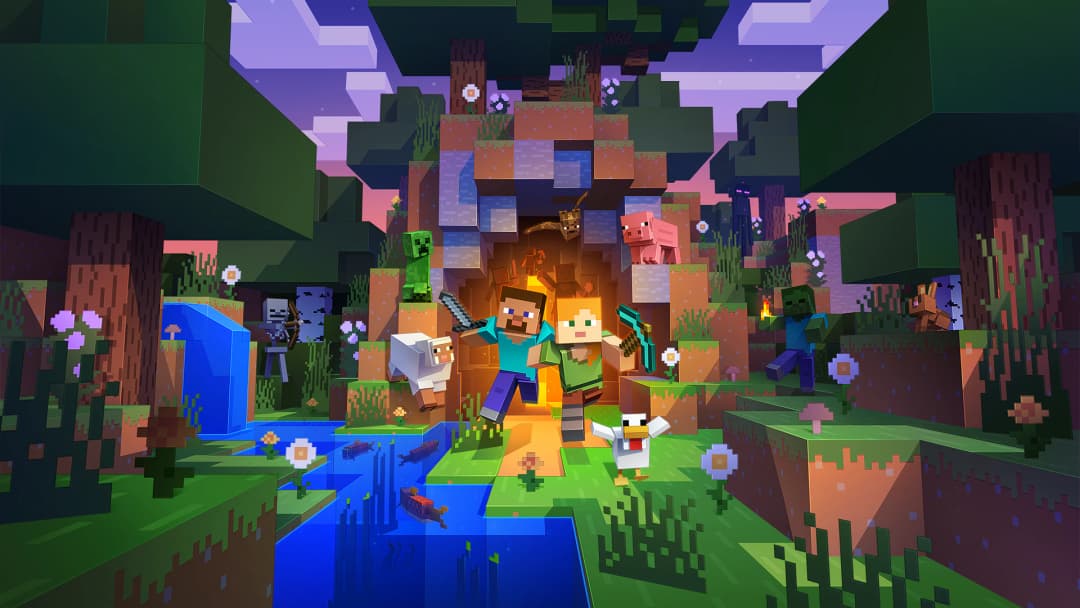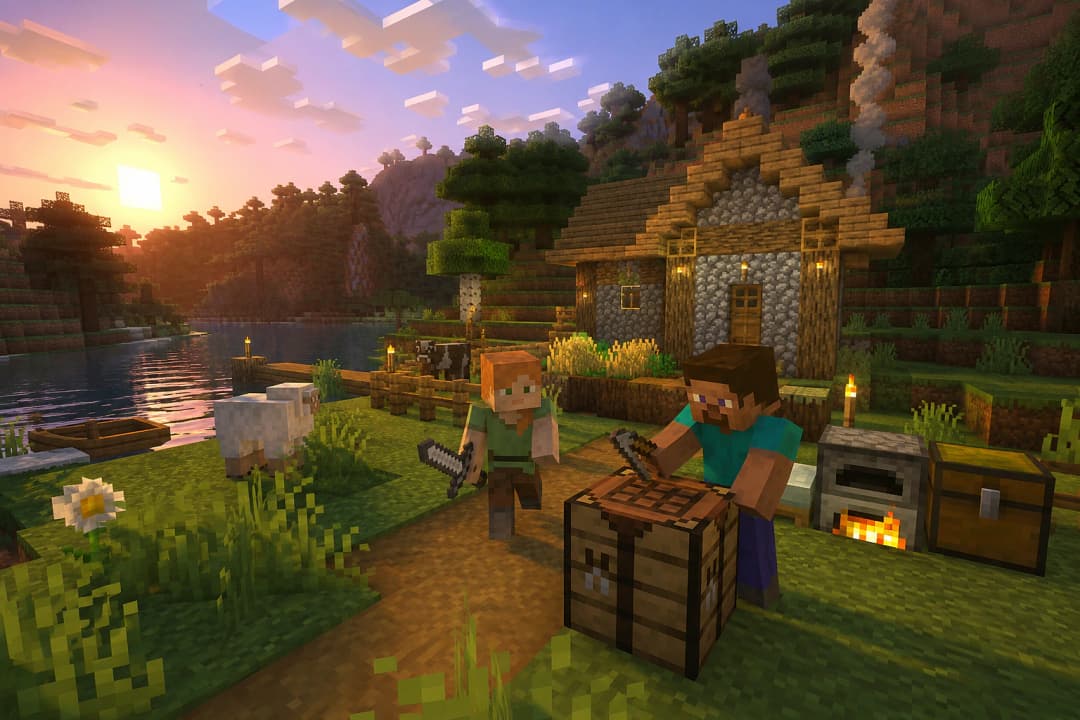
The gaming industry is no longer just a sector of entertainment; it has become the definitive medium of modern culture. What started as a novelty of simple pixelated blocks moving across a cathode-ray tube has transformed into a multi-billion-dollar juggernaut that outpaces Hollywood and the music industry combined. Today, we stand on the precipice of a new era where the line between reality and simulation is blurring into non-existence. This is the story of how we got here, and more importantly, where the technology is taking us next.
The Exponential Leap: How Gaming Became Strikingly Real
To understand the sheer magnitude of modern gaming, one must look back at the architectural constraints of the past. For decades, game developers fought a constant war against hardware limitations. Every sprite, every polygon, and every byte of memory had to be fiercely budgeted.
Today, those chains are broken. The current generation of hardware has introduced technological shifts that have fundamentally altered our relationship with virtual spaces.
Photogrammetry and Asset Density: Modern engines allow developers to scan real-world objects, landscapes, and actors, importing them into digital environments with microscopic accuracy. Forests feel dense and organic, cities look weathered and alive, and characters express complex, subtle human emotions.
Ray Tracing: The holy grail of computer graphics—simulating the physical behavior of light—is now a standard baseline. Light bounces realistically off surfaces, shadows soften naturally based on distance, and reflections dynamically mirror the world outside the player’s field of view.
The End of Loading Screens: The integration of ultra-high-speed solid-state drives (SSDs) changed everything. It transformed game design itself. Worlds no longer need to be segmented by claustrophobic corridors or elevators designed to hide loading times. Players can now plunge through dimensions instantaneously.
The result is an ecosystem of games that are not just impressive to look at, but deeply atmospheric. They capture the nuances of atmosphere, weather, and human expression so vividly that players are no longer just controlling a character; they are inhabiting a living world.
The Next Generation of Consoles: Silicon and Cloud Convergence
As we look toward the horizon of the next architectural cycle of home consoles, the focus shifts from raw resolution to intelligent performance. The next generation of hardware will not simply be about chasing 8K resolutions; it will be defined by architecture that redefines processing efficiency.
Neural Processing and AI Upscaling
Hardware manufacturers are moving away from brute-force rendering. The future lies in specialized AI cores embedded within silicon chips. Deep learning algorithms will predict and render frames before the user even inputs a command, allowing consoles to deliver unprecedented frame rates and visual fidelity without melting the hardware or drawing excessive power.
Cloud Integration and Hybrid Compute
The physical box under the television will evolve into a local anchor for a massive, cloud-integrated network. While the console handles immediate physics and input latency, remote data centers will compute background simulations, persistent world states, and complex AI behaviors for thousands of concurrent players. This ensures that the world changes and ages even when the player is offline.
Quantum Physics and Total Ingestion
Next-generation physics engines will move away from scripted destructions. Every material in a game—be it concrete, glass, wood, or steel—will possess its own structural integrity data. Buildings will collapse dynamically based on where they are struck, and liquids will flow according to genuine fluid dynamics, making the environment completely malleable and reactive.
The Next Wave of Software: What to Expect from Future Titles
With hardware capable of simulating reality, the software running on it will shift toward unprecedented depth. The upcoming generation of video games will challenge our understanding of narrative, interaction, and agency.
Hyper-Reactive Worlds
The non-playable characters (NPCs) of tomorrow will no longer rely on rigid, pre-written dialogue trees. Integrated with advanced contextual language models and behavioral AI, digital citizens will remember past interactions, hold unique opinions, adapt to player playstyles, and coordinate complex strategies in real-time, making every playthrough distinct.
The True Expansion of VR and XR
Virtual and Extended Reality will move past the experimental phase. As headsets become lighter, wireless, and boast resolutions that match the human eye's limit, games will offer true spatial immersion. Combined with haptic suits that simulate the feeling of wind, rain, or impact, gaming will transition from an auditory and visual experience into a fully tactile one.
Infinite Persistence
Future titles will move away from isolated sessions. Games will feature persistent, shared ecosystems where the actions of a single player can permanently alter the economy, political landscape, or geography of a world for the entire community. You will not just play through a campaign; you will leave a historical footprint in a digital universe.
The Endless Horizon
We are living in the golden age of interactive media. The journey from arcade cabinets to photorealistic, boundless digital realms has been swift, yet the trajectory ahead suggests we have only scratched the surface of what is possible. The future of gaming promises a canvas where imagination is the only remaining bottleneck. As technology continues to evolve at a breakneck pace, the games of tomorrow will not just be played—they will be lived.